



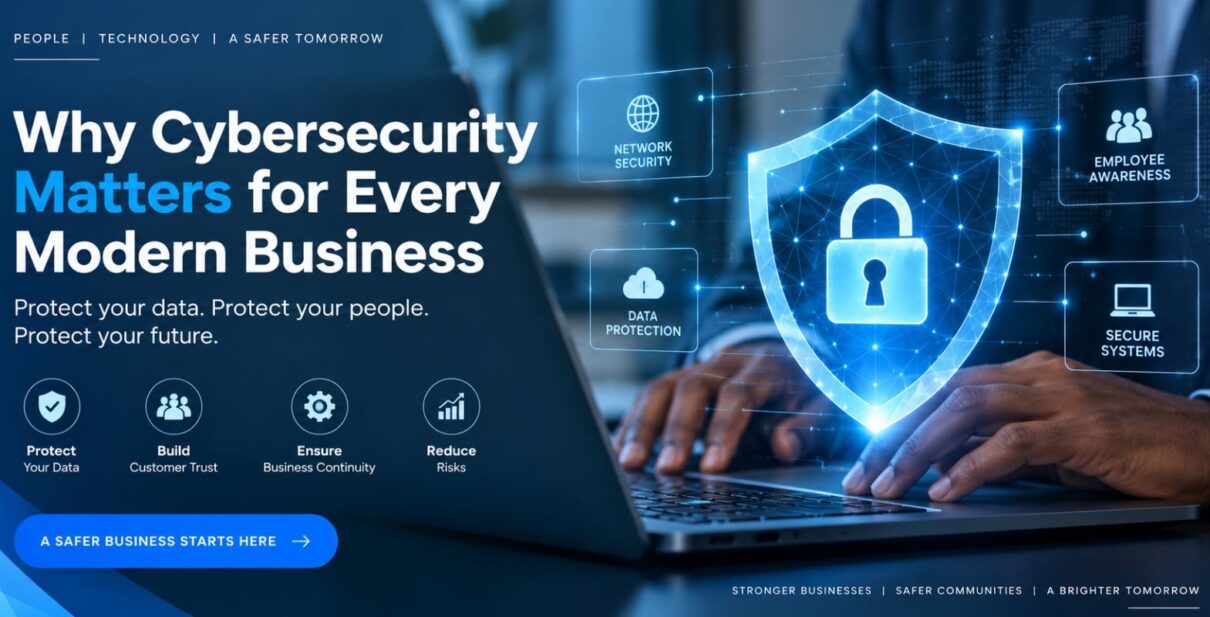
Cybersecurity is no longer only a concern for large technology companies. Businesses of every size rely on websites, computers, cloud platforms, mobile applications, online payments and digital communication, making cybersecurity an essential part of modern business operations.
A single security incident can result in data loss, financial damage, operational disruption and loss of customer trust. Having the right security measures in place helps businesses reduce these risks and operate with greater confidence.
What Is Cybersecurity?
Cybersecurity involves protecting computers, networks, applications, systems and data from unauthorised access, attacks, damage or disruption.
It includes both technical solutions and good business practices designed to prevent security incidents and respond effectively when they occur.
Common Cybersecurity Risks
Modern businesses can face many different types of cyber threats, including:
- Phishing Attacks — Fraudulent emails or messages designed to steal information.
- Malware — Malicious software that can damage systems or compromise data.
- Ransomware — Attacks that restrict access to systems or files and demand payment.
- Weak Passwords — Poor password practices can allow unauthorised access.
- Data Breaches — Sensitive customer or business information can be exposed or stolen.
- Website Attacks — Vulnerable websites and applications can be targeted by attackers.
- Insider Risks — Employees or compromised accounts can unintentionally or deliberately expose information.
Why Cybersecurity Is Important
Protecting Business Data
Businesses hold valuable information such as customer details, financial records, employee information and confidential documents. Protecting this information helps reduce the risk of data breaches.
Maintaining Customer Trust
Customers expect businesses to protect their personal information and provide secure digital services. Strong cybersecurity can help demonstrate that security is taken seriously.
Reducing Business Disruption
Cyberattacks can interrupt websites, applications, communication systems and business operations. Security measures can help reduce the likelihood and impact of these disruptions.
Protecting Financial Resources
Security incidents can result in financial losses through fraud, downtime, recovery costs and other consequences. Preventive security measures can help businesses reduce these risks.
Practical Cybersecurity Measures
Businesses can strengthen their security by implementing basic measures such as:
- Using strong and unique passwords
- Enabling multi-factor authentication
- Keeping software and systems updated
- Regularly backing up important data
- Securing websites and applications
- Limiting access to sensitive information
- Training employees to recognise phishing and other threats
- Monitoring systems for suspicious activity
- Developing an incident response plan
- Regularly assessing security vulnerabilities
Cybersecurity Should Be an Ongoing Process
Cybersecurity is not a one-time activity. Threats continue to evolve, and businesses regularly introduce new systems, applications and digital services.
Regular security assessments, software updates, employee awareness and continuous monitoring can help organisations maintain stronger protection as their technology environment changes.
Building a More Secure Business
Every business has different technology, risks and security requirements. The right cybersecurity strategy should therefore be based on the organisation’s systems, data, operations and specific risk exposure.
At Neriel Data Systems, we help businesses strengthen their digital environments through practical cybersecurity, data protection, secure software and technology solutions.
Smart Technology. Driving Innovation.